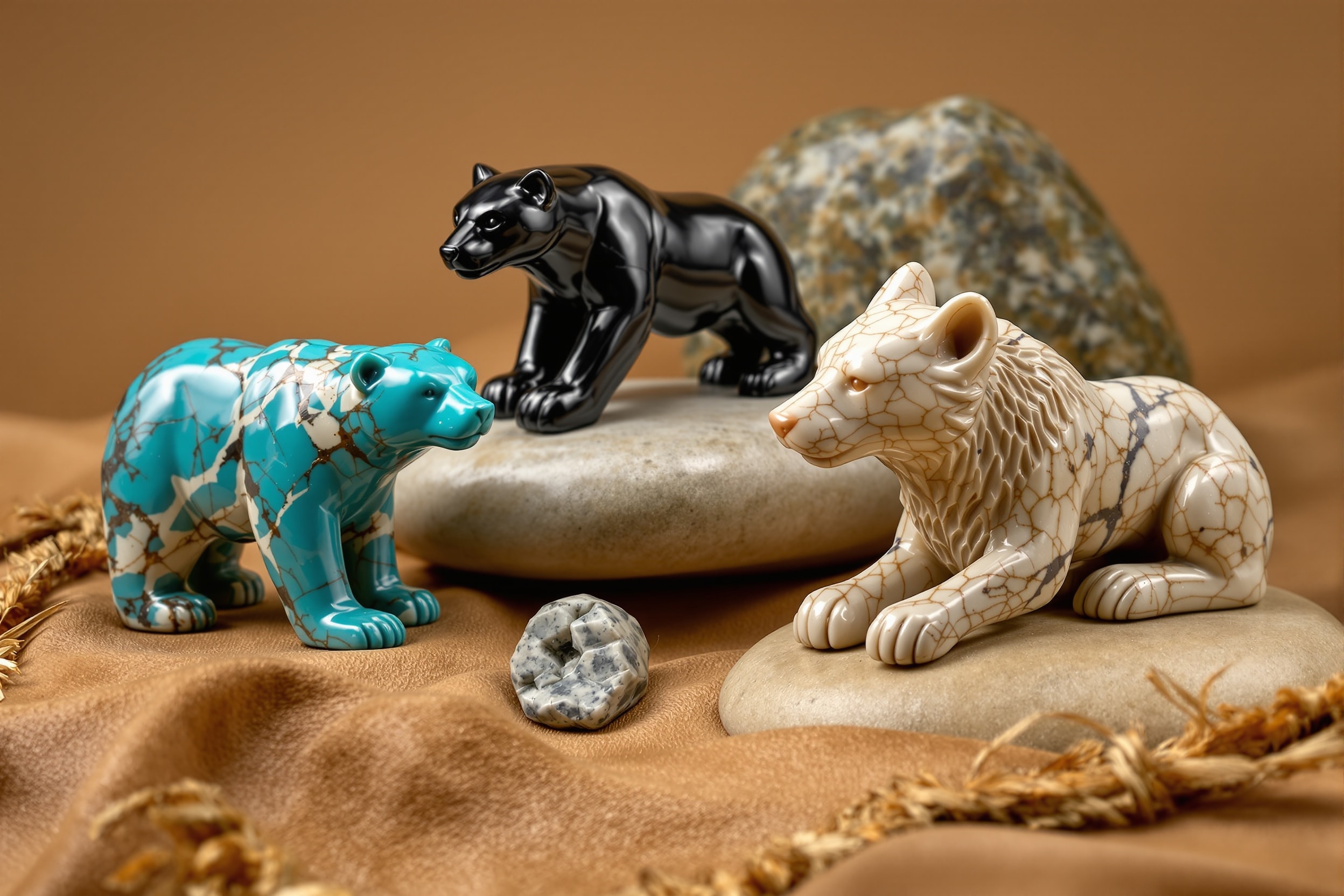
Among all Native American art forms, few are as intimate as the Zuni fetish — a small carved animal that fits in the palm of the hand and carries, in Zuni belief, a living spirit. For the A:shiwi people of western New Mexico, these carvings are objects of prayer and protection first and artworks second, though in the hands of a master they are unmistakably both.
This page introduces the craft: the stones, the technique, and the tradition of carving families. To understand the meaning of the animals — the six directions and their guardians — see our companion guide to understanding Zuni fetishes.
What a Fetish Is
The word "fetish," in this context, is an anthropological term for a carved effigy believed to hold spiritual power; it has nothing to do with any modern colloquial meaning. In Zuni tradition the carving is a home for a spirit that can lend its qualities — the bear's healing, the mountain lion's resolve — to the person who keeps and honors it. Historically, hunters carried fetishes for success and protection; today many carvings are made for collectors and admirers, and the finest are held in major museum collections.
The Carver's Materials
Half the beauty of a fetish is the stone. Zuni carvers read the color and grain of a raw piece and let it suggest the animal within. Common materials include:
- Turquoise — prized and sacred, in blues and greens with natural matrix.
- Jet — a deep black stone, often used for bears and ravens.
- Serpentine and fluorite — greens ranging from apple to forest.
- Picasso marble — a tan-and-brown patterned stone whose veining becomes fur or feather.
- Pipestone — a warm red used since ancient times.
- Shell, antler, and fossilized ivory — pale materials for birds, badgers, and rams.
- Alabaster, dolomite, and marble — soft whites that carry fine detail.
Modern carvers work these materials with rotary tools, files, and abrasives, then polish to a soft or high sheen — but the eye that finds the animal in the stone is the same one Zuni carvers have trained for generations.
The Offering Bundle and the Heartline
Two details mark many traditional carvings. The first is the offering bundle — a tiny arrowhead, turquoise heishi, coral, or shell tied to the animal's back with sinew as a gift to its spirit. The second is the heartline, an inlaid line running from the mouth to a spirit or heart symbol, representing the breath of life. Neither is mere decoration; each is part of the carving's meaning.
Masters and Carving Families
Zuni carving passes through families, and certain names are known throughout the art world for work now held in public collections. The historic carver Leekya Deyuse (active in the early and mid twentieth century) is often credited with elevating fetish carving to fine art, and multi-generational families — carrying names long associated with the tradition — have continued to innovate in animal subjects, from the classic bear and mountain lion to intricate corn maidens and multi-figure pieces. Museums such as the Wheelwright Museum of the American Indian and the Heard Museum hold and exhibit important examples, and their scholarship is the best way to learn to recognize individual hands.
Collecting With Respect
Because fetishes carry spiritual meaning, thoughtful collectors treat them with care rather than as curios. Buy authenticated work — the Indian Arts and Crafts Board explains how to be sure a carving is genuinely Zuni-made — and learn the animal's significance before you keep it. A fetish honored is, in the tradition's own terms, a fetish that will honor you in return. Continue to our guide on the six directions and guardian animals to learn what each carving means.